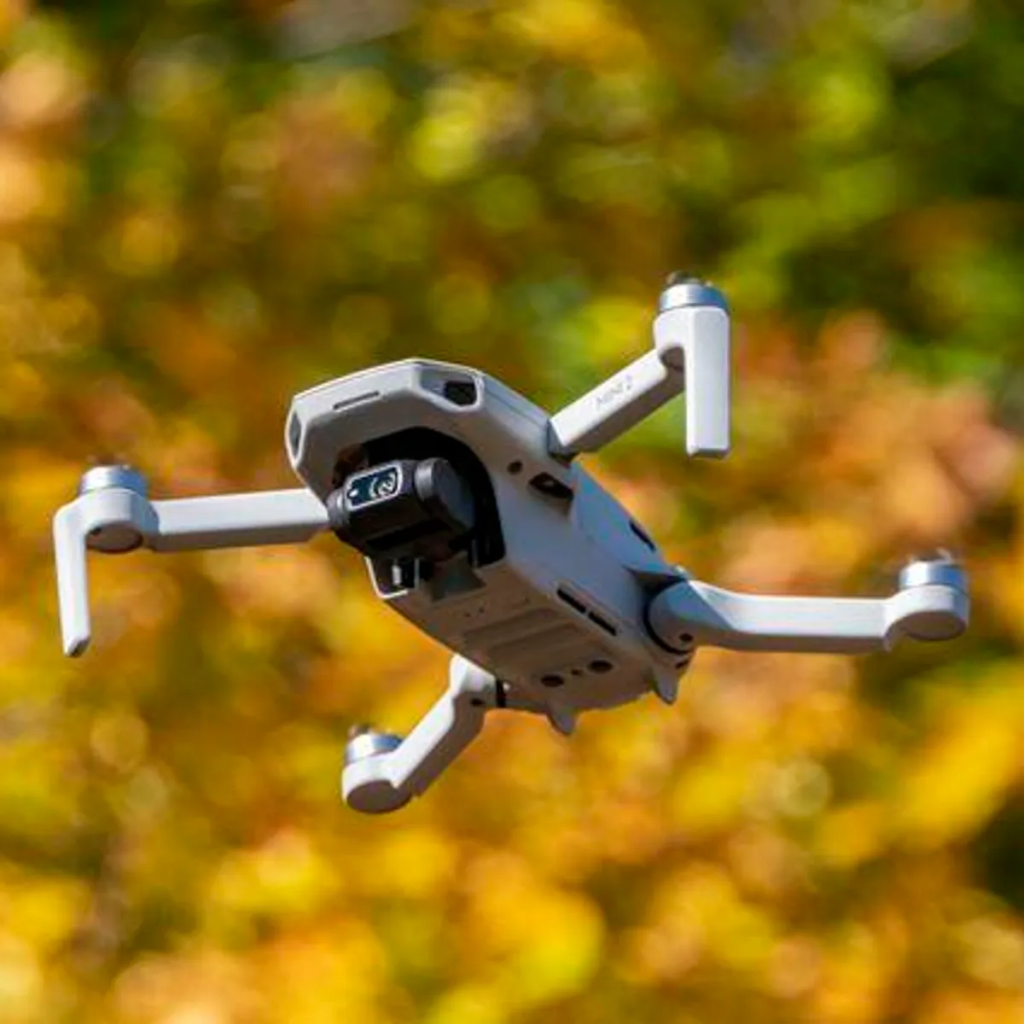
DJI’s affordable, crowd-pleasing Mini family of drones has stolen the spotlight in recent years, but the drone camera review australia company is once again turning attention to its mid-sized Air series. The Air 3 ($1,099) is notably the first in the lineup with a dual-lens camera and all-around obstacle sensors. It’s an excellent performer overall and a worthwhile choice if you need a mid-telephoto lens, but it doesn’t do enough to justify its cost compared with our Editors’ Choice winner for enthusiasts and creators, the more affordable DJI Mini 3 Pro ($759).
Pros
Wide-angle and mid-telephoto camera stack
Sharp 4K footage with standard, flat, or HDR color profiles
Gimbal-stabilized cameras with 60-degree upward tilt
All-around obstacle avoidance
Hyperlapse, slow-motion, and waypoint flight features
Long battery lif
Cons
Fixed-aperture lenses
Requires FAA registration
Meager 8GB of internal storage
DJI Air 3 Specs
Dimensions 3.9 by 3.6 by 8.2 inches
Weight 1.6 lb
Rotors 4
DJI Doubles Down on Dual Cameras
DJI largely competes against itself in the consumer drone market, but it continues to iterate and innovate. The Air series was born out of a desire for smaller, more portable drones and paved the way for the even tinier Mini line. Battery life has continually improved, too, while obstacle avoidance sensors have made their way into all but the entry-level models. What’s DJI left to do? The answer, it seems, is to add more cameras. The Mavic 3 introduced a dual-camera system, and it got a triple-camera upgrade in the form of the Mavic 3 Pro. And now, the Air 3 also has two cameras instead of one.
The original Mavic Air wasn’t large enough at 1.9 by 3.3 by 6.6 inches (HWD) to handle a dual-camera gimbal. But since the 249g Mini line hit the market, DJI’s engineers have let the Air series creep up in size. The Air 3 is the largest yet at 3.9 by 3.6 by 8.2 inches (HWD), slightly bigger all around than the Mavic Air 2 (3.8 by 3.3 by 7.1 inches). Despite the size increase, you shouldn’t have too much trouble finding a place for it in your camera bag or dealing with its weight (1.6 pounds).
Keep in mind that the drone does require FAA registration. Pilots who fly for fun need to shell out a $5 fee every three years, something you can avoid with the Mini 3 Pro and other drones that weigh 8.78 ounces (249g) or less. It’s a minor nuisance for flying in the US, but other countries are much more restrictive, so we recommend the Mini 3 Pro instead for travel. Pros who use a drone to make money also need to obtain a remote pilot certificate even if their flier comes in under that 249g threshold.
The Air 3’s two cameras share equal space on a three-axis gimbal, and each benefits from DJI’s previous miniaturization efforts. The main 24mm F1.7 lens comes over from the Mini 3 Pro, while the short telephoto 70mm F2.8 is the same one as on the Mavic 3 Pro. A Quad Bayer Type 1/1.3 sensor backs each lens for consistent picture and video quality. The lenses have fixed apertures, but you can add a set of four ND filters for $99 if you want. The gimbal’s tilt range is ample, too: Like with the Mini 3 series drones, you can point the camera straight down at a 90-degree angle or tilt it up to 60 degrees.
As for alternatives, the aforementioned Mini 3 Pro is the next model down in the DJI line. It provides similar picture quality and also supports obstacle avoidance, albeit without upward coverage. The $1,599 Mavic 3 Classic is the upgrade option. Its Four Thirds camera with aperture control and Hasselblad color should entice photographers, in particular. The Autel Robotics Evo Lite+ ($1,549) is another one to mull. It’s not as capable as any of the DJI models for video, but the drone has forward and aft obstacle sensors, plus integrates a 20MP Type 1 camera with an adjustable f-stop.
Go Standard or Fly More?
DJI rates the Air 3’s flight battery for 46 minutes, but that estimate is a little bit optimistic. In testing, I got closer to 40 minutes of flight time per charge. That’s still about the best battery life you can get from a small drone, though. For comparison, the Mini 3 Pro flies for about 30 minutes with its basic battery, and the entry-level Mini 3 lasts just a few minutes longer. An extended-life battery is available for the Mini 3 series that pushes flight time to 47 minutes to match the Air 3, but it causes those drones to go over the 249g registration cutoff.
DJI Air 3 with Fly More Combo case
The Fly More Combo comes with a carrying case (Credit: Jim Fisher)
The Air 3 has a rather meager 8GB of storage onboard. Just 15 minutes of high-bit-rate 4K footage can fill that up, so you need to add a microSD card for longer record times. You should go with a 64GB card at minimum, but there’s nothing to stop you from using a much bigger 512GB card. DJI recommends using SanDisk Extreme, Lexar 1066x, Kingston Canvas, and Samsung Evo cards with V30 or V90 speed ratings.
DJI Air 3 multi-charger
The base model Air 3 includes the DJI RC-N2 remote, which requires you to load the DJI Fly app on an Android or iOS device for remote viewing and camera control. The $1,349 Fly More Combo adds two additional flight batteries, a three-way charger, and a zippered shoulder bag. Finally, you can get the Fly More Combo with the DJI RC 2 remote, which has a built-in screen, for $1,549. That’s the version I received for review.
 Site Title
Leave a comment